

By Alessio Updated Italian Interior Design
In brief
- Quiet luxury interior design is expressed through surfaces that age well, not through logos or visible ornament.
- The five materials quiet luxury materials: honed travertine, oiled and wire-brushed oak, hand-burnished Venetian plaster, washed linen and unlacquered brushed brass.
- What they share: matte, tactile, slightly imperfect, made by hand — and better after years of use than on day one.
The luxury that whispers: how a fashion trend landed in interior design
“Money talks, wealth whispers.” There is no better definition of quiet luxury than this now-iconic phrase. The principle was born in fashion, where it meant trading loud logos for impeccable, understated pieces; in recent years it has landed with equal force in interior design, reshaping the way we think about high-end homes.
Quiet luxury interior design has nothing to do with logos or elaborate decoration: it is about the choice of materials and their ability to reveal their value over time, while the space is lived in, not on the day it is delivered.
It’s no coincidence that the great masters of Italian and European design made restraint their signature decades before anyone coined the term “quiet luxury.” Flemish architect Vincent Van Duysen has spent three decades treating stone, oak, lime and linen as instruments of the same score — his spaces are soothing without ever tipping into display. He is also the architect behind the Molteni&C flagship in Milan. And looking further back, Charlotte Perriand — whose Nuage bookcase is produced today by Cassina — had already understood that true refinement lies in the balance between materials, not in their quantity.
Quiet luxury is not the same as minimalism
Minimalism is a formal discipline built on reduction and empty space. Quiet luxury, by contrast, can hold many objects — as long as none of them are there by accident. The distinction is not between full and empty, but between editing and emptying: every element must contribute to a single, coherent narrative from start to finish.
The 5 materials that define quiet luxury, surface by surface
Quiet luxury is built above all through surfaces: they are the building blocks of any project, especially one that follows quiet luxury principles. Here are five of the best materials you can choose for yours.
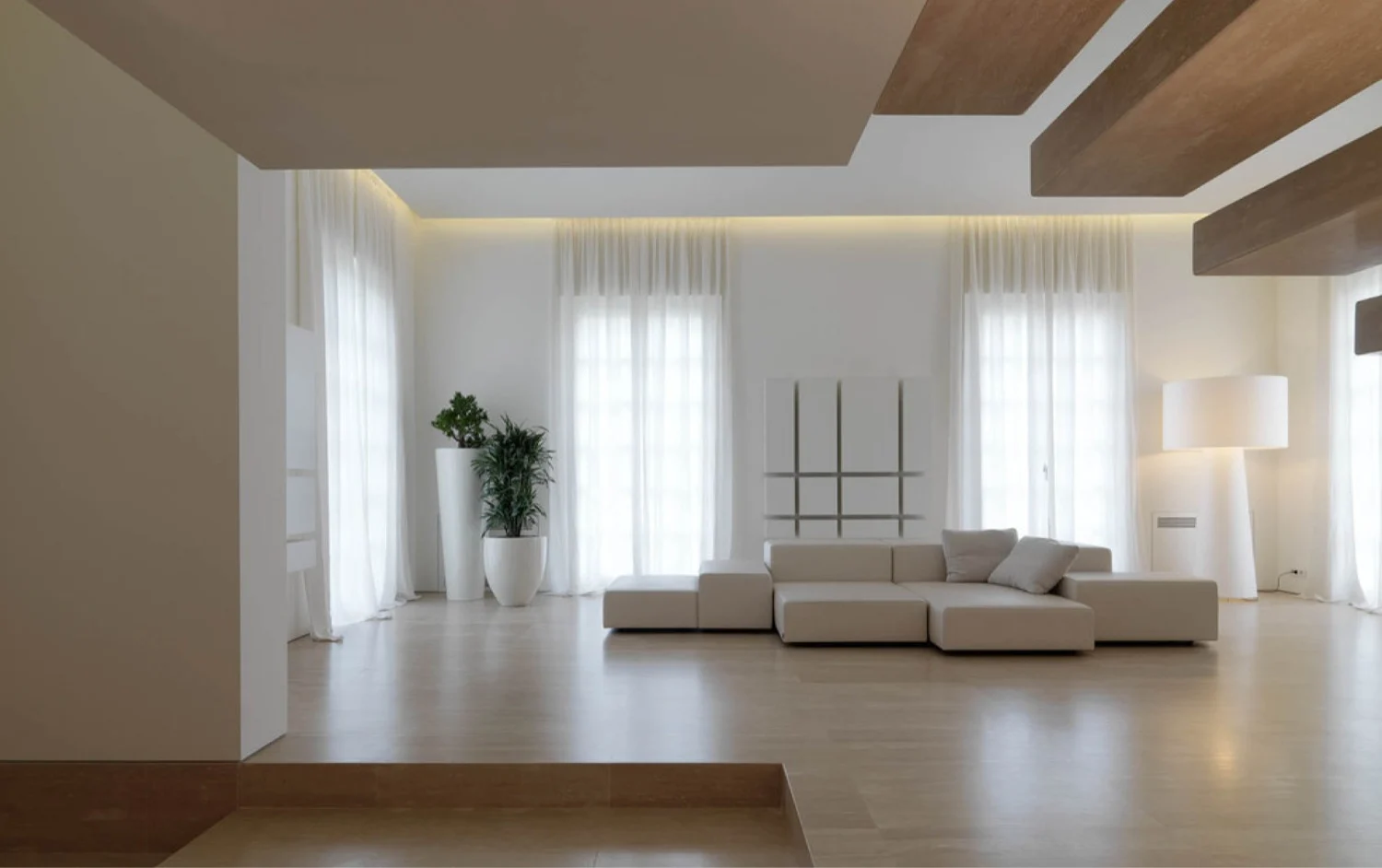
1. Flooring — Travertine
Travertine is, in many ways, the material quiet luxury interiors return to more than any other. A sedimentary limestone formed near hot springs, it is full of natural fissures and cavities, so no two travertine floors are ever alike. Unlike polished porcelain or engineered stone, travertine is typically honed or brushed rather than glossed, so it absorbs light instead of reflecting it back sharply: the room feels warm and matte rather than showroom-bright. It has carried architectural weight for millennia: in Italy the benchmark is travertino romano, quarried around Tivoli since antiquity — the stone of the Colosseum and of St. Peter’s colonnade. That combination of visible imperfection, soft light behavior, and its unmistakable presence in history is exactly why it fits quiet luxury.
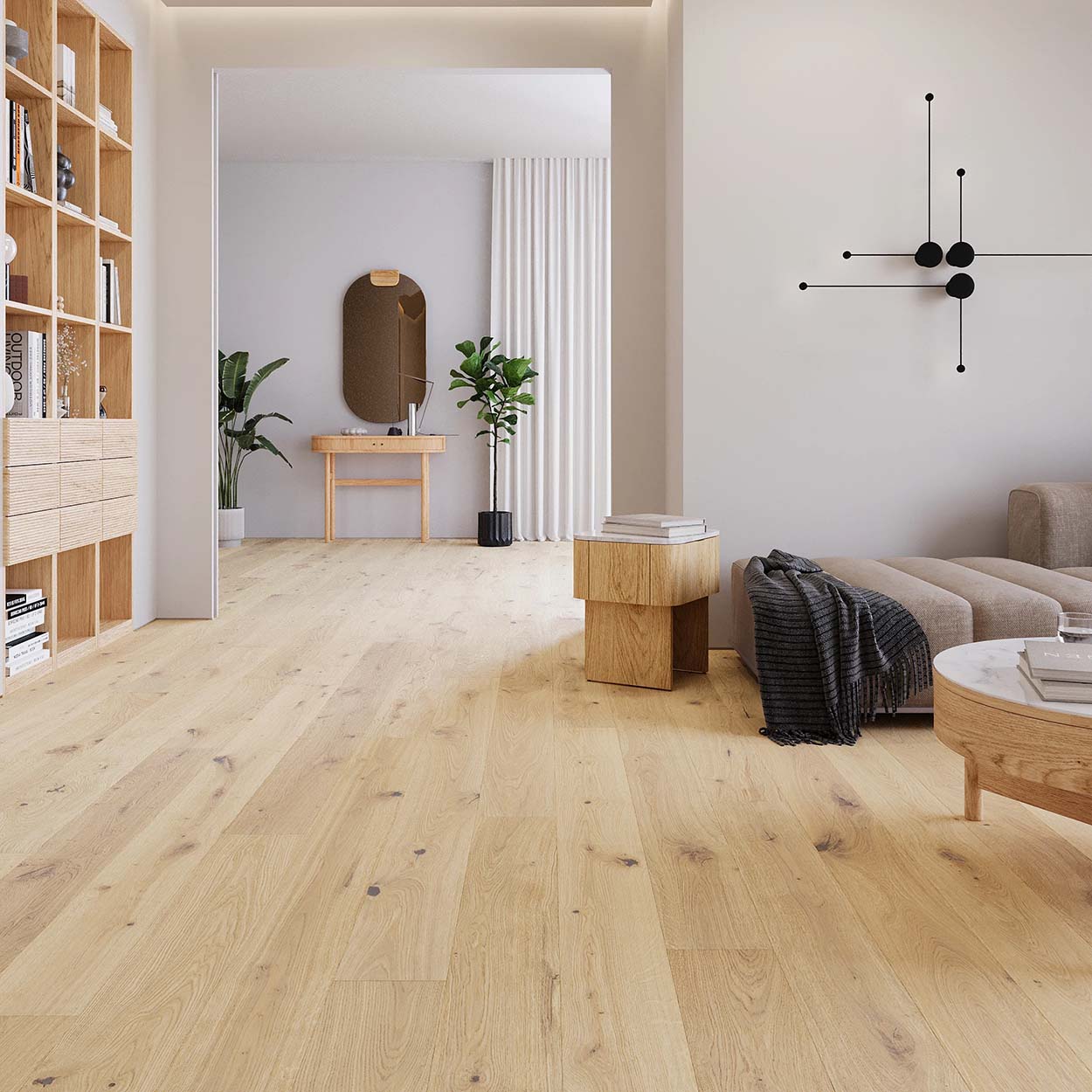
2. Wood — European oak, oiled and wire-brushed
Among hardwoods, oak is the one quiet luxury keeps returning to for flooring and joinery, but only in a specific finish: natural oil rather than lacquer, wire-brushed rather than sanded smooth. This treatment opens the wood’s pores instead of sealing them, so the grain stays tactile and the surface actually ages, deepening in tone, taking on soft scuffs and a patina. Oil-finished oak also has to be maintained by hand over the years, which is itself part of the appeal: it asks for care, and it shows that care in return. It is a floor that rewards the people who look after it.
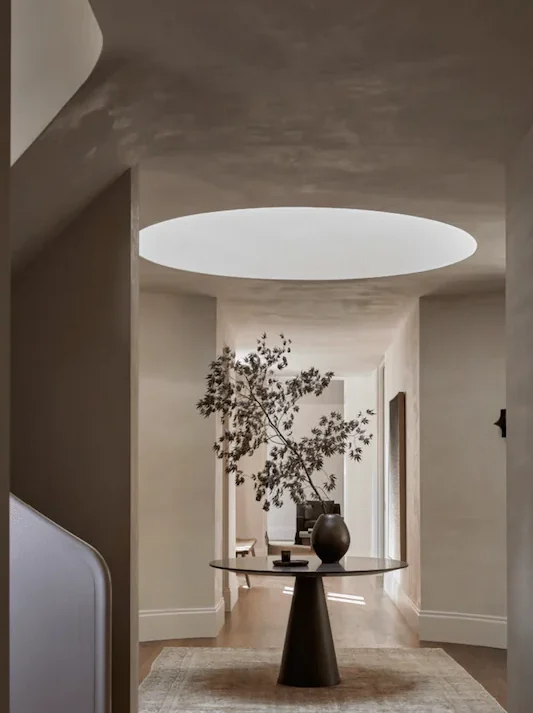
3. Walls — Venetian plaster
Venetian plaster — known in Italy as stucco veneziano and marmorino — is slaked lime mixed with marble dust, applied in thin layers and burnished by hand with a steel trowel until it develops a soft, stone-like sheen. What makes it a quiet luxury material rather than simply a decorative finish is that it has no fixed color or texture. It shifts depth and tone as light moves across it through the day. It’s also inseparable from the hand that applies it: the same craftsmanship that makes every travertine slab and oak plank unique gives a plastered wall its subtle, hard-to-measure value.
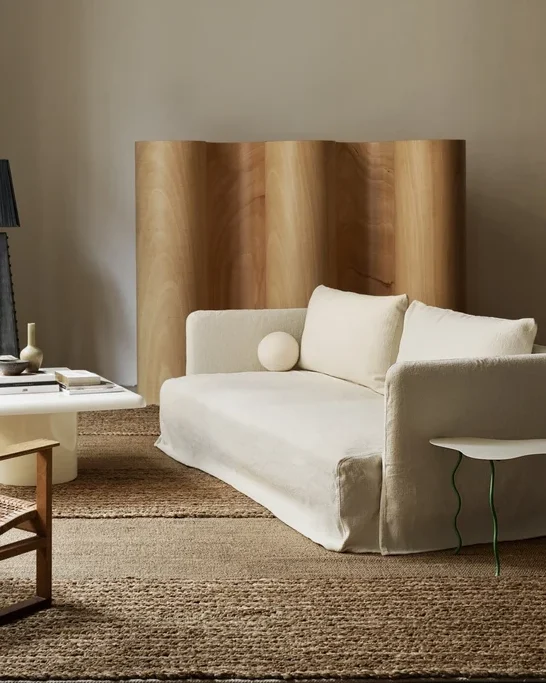
4. Textiles — Washed linen
Linen is a fabric woven from flax fibers and has been used for furnishing for thousands of years, but it’s the washed version that belongs to quiet luxury specifically. The washing process breaks down the fiber’s natural stiffness, giving it an immediate, relaxed drape and a slightly irregular, matte surface rather than a crisp, uniform one. Crucially, linen ages differently from many fabrics: creasing and softening are read as character rather than wear, and the fabric genuinely gets more comfortable and more beautiful the more it’s used.
5. Metals — Brushed brass
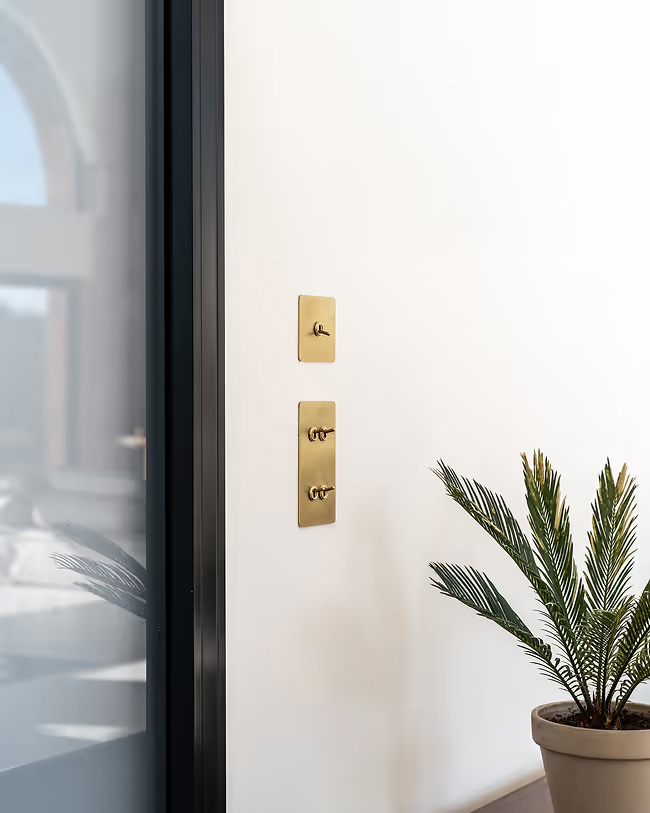
Brass earns its place in quiet luxury on one condition: it must be brushed or satin-finished, never mirror-polished. A brushed surface diffuses light instead of throwing it back as a hard glare, so the metal reads as warm and architectural rather than decorative or flashy; it sits closer to a hardware detail than a statement piece. Brass is also a living metal: left unlacquered, it oxidizes and darkens slightly with handling and time, developing a patina that chrome or polished gold finishes never will. Used sparingly, on a door handle, a cabinet pull, a slender fixture, it becomes the kind of detail that a guest notices only on the second or third visit. Quiet luxury reveals its value patiently, rather than screaming about it.
Lighting: the invisible material that makes the difference
Lighting deserves its own mention, because in quiet luxury it is never an object but a quality — and it has quietly run through every material above. Integrated into coves, concealed behind millwork or built into floor details, it keeps the ceiling clear and lets a room be lit without the fittings becoming visual objects.
Switches: the detail you touch every day
If lighting is the invisible material, the switch is the one point where a room asks to be touched — and where many beautiful interiors quietly fail. A standard white plastic plate on a plastered wall undoes, in a single gesture, the work of every surface around it. Quiet luxury treats switches and sockets as hardware: solid metal, a weighty, mechanical click, and a finish that ages with the room. The most convincing choices are vintage-inspired toggle switches in solid antique brass — a “living” finish that darkens where it is touched most, just like the brushed brass above — or in metal finishes such as brushed nickel, gold or dark bronze, with plates coordinated to the same finish.
A luxury that is built, not bought
The common thread running through these five materials is that each one earns its place by aging well rather than by looking perfect on day one. And since only the material decides how a space will look in ten or twenty years, it is also where every Esperiri project begins: we choose the materials first and build the whole picture around them, not the other way around.
For those who want to experience these materials firsthand — from travertine to oiled oak, from hand-burnished plaster to the finest linens of Italy’s best textile houses — our Furniture Shopping Tour through the excellence of Made in Italy remains the most direct way to discover, in person, the materials that truly express quiet luxury.
Shop, experience, and discover Italian design with Esperiri. Milan
Frequently asked questions
What is quiet luxury in interior design?
An approach in which value is expressed through the quality of materials, craftsmanship and longevity rather than logos or visible ornament.
Is quiet luxury the same as minimalism?
No. Minimalism is built on reduction; quiet luxury is built on editing. A quiet luxury room can hold many objects, as long as none of them is there by accident.
Which materials are typical of quiet luxury?
Honed travertine, oiled and wire-brushed European oak, Venetian plaster, washed linen and brushed, unlacquered brass.
Why do these materials suit quiet luxury?
They are matte, tactile and slightly imperfect, and they improve with use — developing patina instead of looking perfect only on the day they are installed.
Where can I discover and shop Italian materials in person?
Esperiri’s Furniture Shopping Tour guides you through Milan’s showrooms and best Italian neighborhoods, so you can see and touch materials in person, with our team supporting you from design to delivery of both standard and custom-made furniture, all Made in Italy.