

By Alberto Quinteri Italian Interior Design
At luxury level, renovating the interiors of a home in Italy starts from around €3,900 per square metre of walkable floor area, or around €2,850 per square metre of commercial area as quoted in Italian sales listings, for works, systems and finishes, VAT excluded. With bespoke furniture, it starts from around €6,000 per walkable square metre, or around €4,400 per commercial square metre. These are indicative starting figures: every project is unique.
In Brief
- The luxury benchmark. At a high-end specification, renovating the interiors of a house in Italy starts from around €3,900 per square metre for works, systems and finishes, VAT excluded.
- With bespoke furniture. Made-to-measure kitchen, wardrobes, wall units and boiserie take it to around €6,000 per square metre and up.
- Walkable area. Every figure per square metre refers to the net walkable floor area, measured inside the walls, not the commercial area used in Italian sales listings, which also counts walls and outdoor spaces and is usually 25 to 35 per cent larger.
- Interiors only. These figures cover interior works. Structural walls, roofs, façades, external insulation and outdoor spaces are excluded and can change the budget substantially.
- Every line has its own unit. Floors are priced per square metre laid, bathroom fittings per piece, doors per door, boiserie per square metre of wall. Windows are priced per window. That is how a 130 m2 apartment and a 600 m2 villa can be budgeted with the same logic.
- Professional fees come on top. Surveyor, architect and interior designer usually cost 5 to 10 per cent of the budget allocated to the project.
- Indicative, not a quote. Every figure in this article is a starting point, taken from the budgets we prepare for our clients. Every project is unique, and only a survey and a full design give a real number.
Why the Cost of Renovating a House in Italy Has No Single Figure
The cost of renovating a house in Italy has no single figure because scope, the condition of the building and the level of finish change it more than anything else. A stone farmhouse in Val d’Orcia, a villa on Lake Como and an apartment in Milan raise different questions: structure in the first, access and permits in the second, systems and acoustics in the third. Size changes the picture too. Some costs grow with the square metres, like screeds, floors and the general works. Others grow with the number of rooms and with the choices made in each: every extra bathroom, door or wardrobe adds its own cost. That is why we give each figure below in the unit that actually drives it, rather than a single total that only fits one home.
Renovation Costs per Square Metre in Italy at Luxury Level
At the specification our clients typically choose, renovating the interiors starts from around €3,900 per square metre of floor area for works, systems and finishes, VAT excluded. With bespoke furniture in every room, it starts from around €6,000 per square metre. Here and throughout, a square metre means walkable floor area, measured inside the walls: a 130 m2 home in an Italian sales listing usually has around 95 to 105 m2 of walkable floor. Measured on commercial area, the same figures become around €2,850 and €4,400 per square metre. These are indicative starting costs for a home in Milan with three bathrooms every 150 commercial square metres, design lighting and integrated home automation; optional extras such as boiserie, wallpaper and glass works, professional fees, loose furniture and appliances are excluded.
Behind those two figures, each line follows the unit that actually drives it. General works, systems and lighting are measured per square metre of walkable floor area; floors per square metre laid; bathroom fittings, windows and doors per piece; boiserie per square metre of wall. The sections below give each one, always as an indicative starting figure: every project is unique.
All of these figures refer to interior works only. They do not include structural work on load-bearing walls, foundations or floors, new roofs, façades, external insulation, balconies or gardens. In a historic villa or a farmhouse those items can weigh as much as the interiors themselves, and they are budgeted separately once the building has been surveyed.
What Drives Renovation Costs: Building, Place and Finish
Five things decide renovation costs in Italy: the scope of the works, the condition of the building, its location, the level of finish and the way the project is managed.
The building comes first. Historic Italian properties often hide rising damp, tired roof structures or seismic weaknesses. Fixing them adds nothing you can see, but it cannot be skipped. If the house is listed, approvals from the Soprintendenza and the work of specialist restorers extend both the timeline and the budget.
Location comes next. Milan, Lake Como and the most coveted coastal enclaves sit at the top of Italian construction prices, and access matters as much as the address: carrying marble slabs or bespoke joinery up the narrow lanes of a hilltop village costs more than delivering to a city street.
General Works: the Line That Varies Most
General building works start from around €1,450 per square metre for interiors at this level, and this is the line that varies most with what you are renovating: an apartment whose layout largely stays as it is sits near this figure, while a home that is rebuilt room by room, with new partitions everywhere, raised floors or a slab to rebuild, can cost substantially more. Behind that figure lies the work no one sees once the home is finished: site set-up, demolition and the removal of old finishes, new masonry and plasterboard partitions, false ceilings lined with acoustic insulation, new screeds, gypsum skim-coating and paint, the builder’s work that opens and closes walls for every system, and the subframes that hold windows and doors perfectly true.
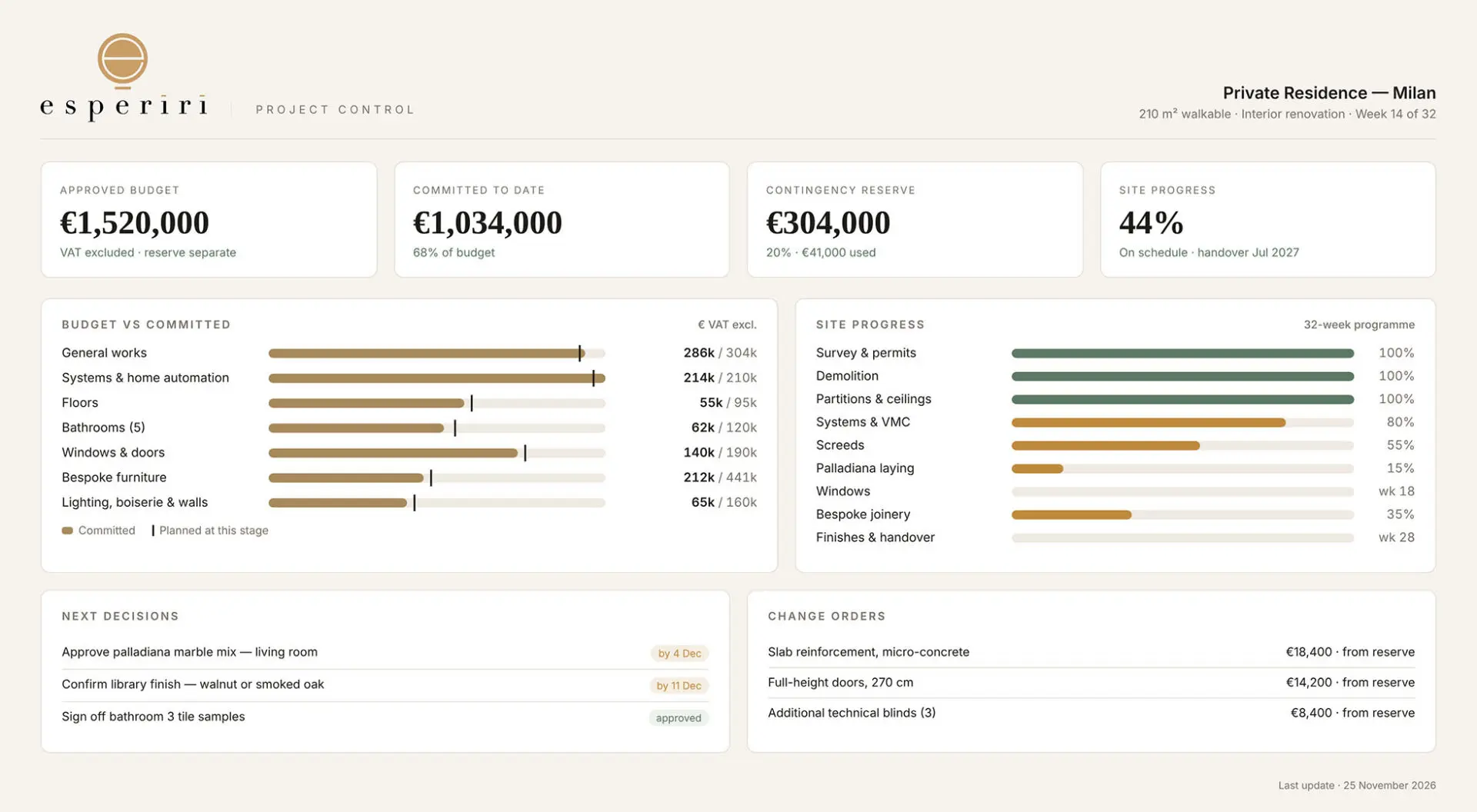
It is also where older buildings keep their surprises. Once the floors are opened, a slab may need reinforcing with a cast of micro-concrete, an extra that no survey can fully predict. This is why we plan every renovation with a reserve, and why a thorough survey before signing is worth every euro.
Systems, VMC and Home Automation: the Invisible Part of a Home Remodel Cost
Systems and home automation start from around €1,000 per square metre, indicatively: the part of a home remodel cost that guests never see and owners feel every day. The electrical installation, with panels, wiring, a data rack with an uninterruptible power supply, and the installation and programming of the home automation, accounts for about €235. Plumbing, the gas supply, multi-split air conditioning by Daikin or Mitsubishi and water heaters add about €390, with designer radiators and towel warmers about €30 more.
Heat-recovery mechanical ventilation (VMC in Italian practice) deserves a sentence of its own. Concealed Zehnder or Viessmann units in the false ceilings exchange stale air for filtered fresh air while recovering most of the heat, so windows can stay closed in a city without the house ever feeling stuffy. It costs about €135 per square metre.
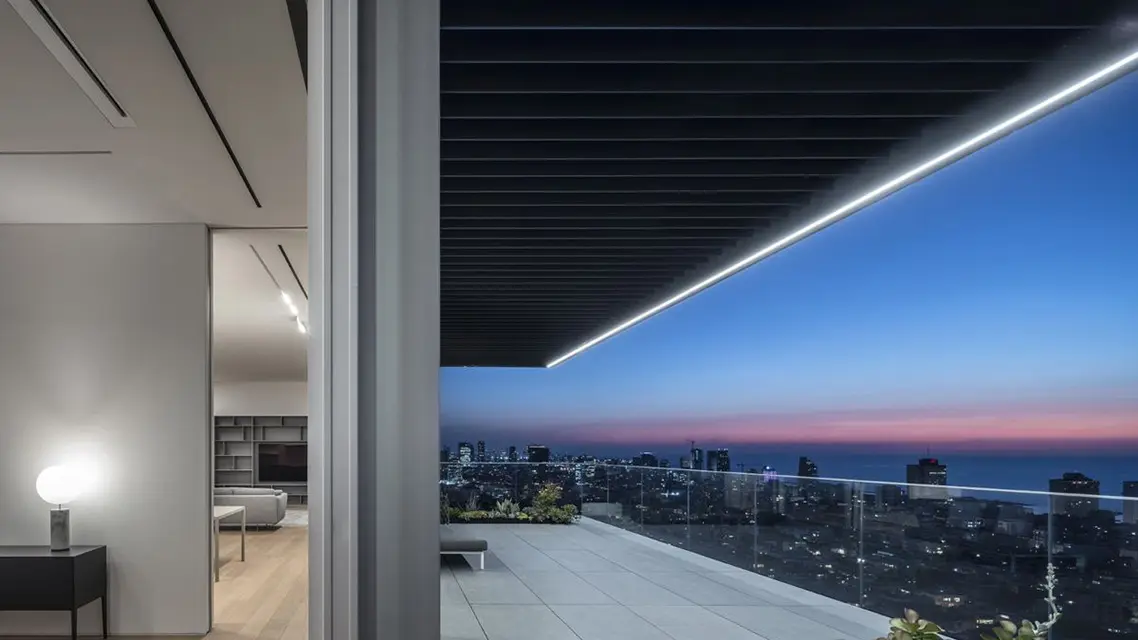
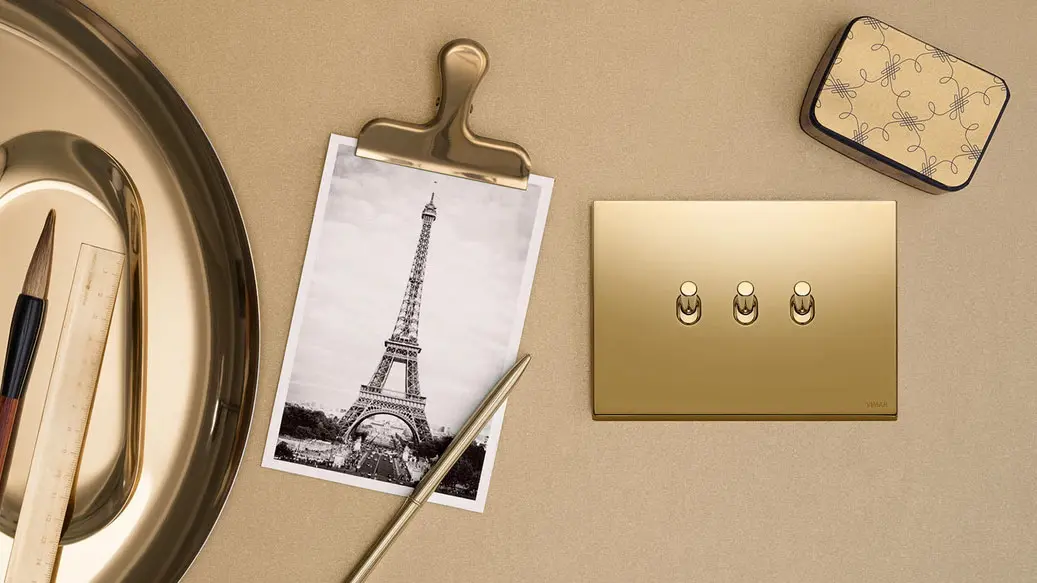
Home automation adds about €200 per square metre in devices. A Vimar wireless system manages lighting, motorised blinds and room-by-room temperature, both for the air conditioning and for the radiators through connected thermostatic heads. The same system handles access by card, presence sensors, the intrusion alarm, cameras and the video entry monitor, all controllable from a smartphone. Switches and sockets are part of the design rather than an afterthought: Vimar plates in dark brushed bronze with vintage-style toggles in the living areas, soft hemp tones in the bedrooms.
Luxury Renovation Costs: Floors, Bathrooms, Windows and Finishes
Floors
Floors are where materials and craftsmanship meet most visibly. They are priced per square metre, supplied and laid, and below they run from the most accessible to the most demanding.
Graniglia tiles, the classic Italian marmette of marble chips set in cement, start from around €200 to €240 per square metre finished: about €100 to €140 for the material and around €100 for laying, grouting, grinding, polishing and treatment. The finishing is what makes them: the joints are filled with a two-component resin in a double pass, the excess is removed with diamond tools, and the floor is levelled, ground and polished in place before an impregnating treatment protects it from water and oil stains without leaving a film. The result keeps a soft contrast of sheen between the cement binder and the marble, a web-like effect that belongs to graniglia rather than being a flaw, and some colours, greens in particular, never polish to a full mirror. Because the resin needs warmth to harden, the rooms must be heated in winter, and parquet, wall finishes, doors and skirting go in only after the floor has been polished.
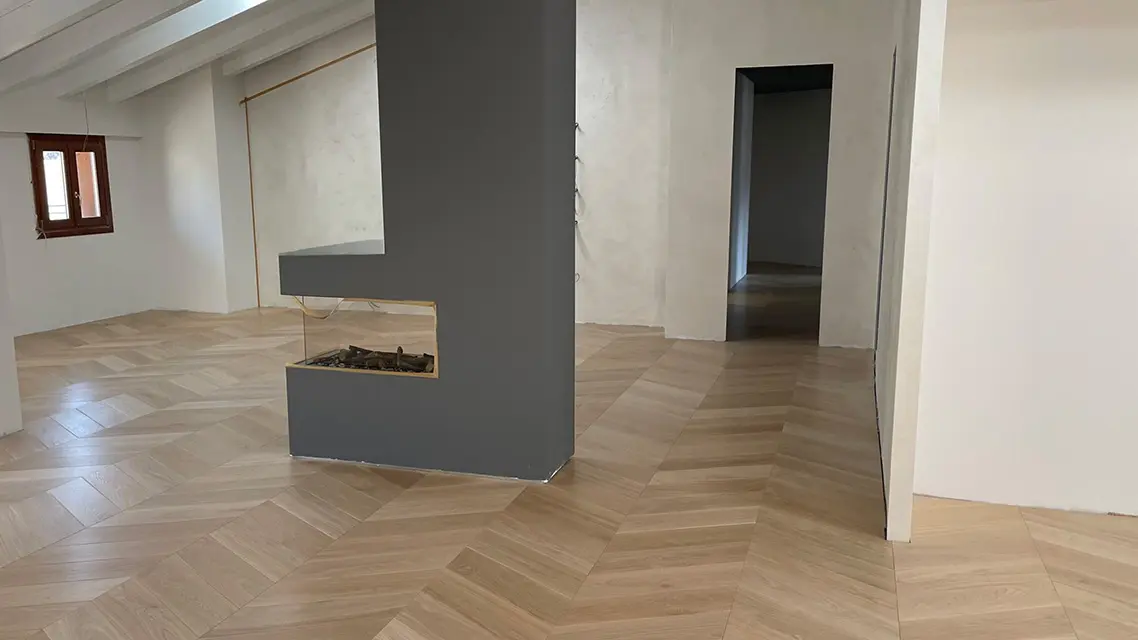
Made-to-measure oak parquet, in planks or herringbone, starts from around €290 to €300 per square metre, including laying and primer.
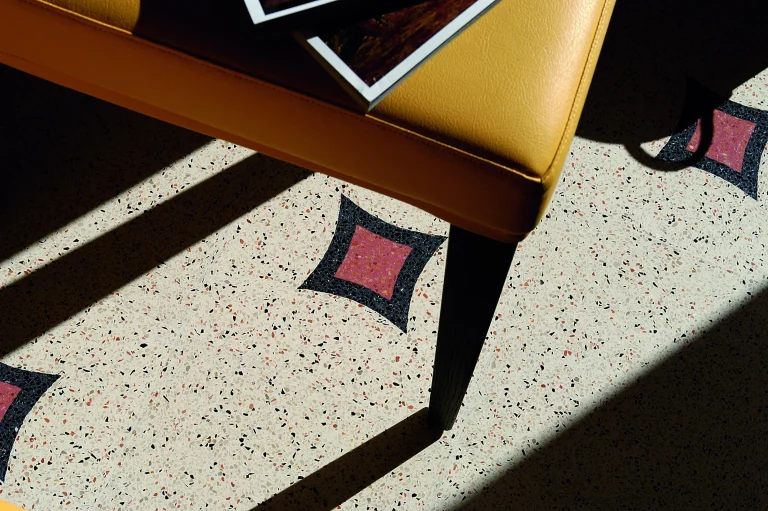
Venetian palladiana, with marble fragments of 7 to 12 centimetres set by hand, starts from around €420 to €480 per square metre, supplied and laid. It is a craft that needs time as much as skill: about a week of laying for every 50 square metres, a day of grouting, a week for the floor to cure, then another week of grinding, polishing and treatment with an impregnating protection. A 50 m2 floor therefore takes around three weeks from the first fragment to the last pass of the polisher, and the schedule of the whole site has to be built around it.
At the top of the range, oak parquet in geometric panels starts from around €540 per square metre, supplied and laid, before even considering marble or stone slabs, which follow the price of the block they are cut from.
Bathrooms
Bathrooms are where choices move the budget most, so they are best read element by element rather than as a single figure. At this level, and per bathroom, designer taps for basin and shower start from around €2,400; wall-hung sanitaryware with a lacquered vanity from around €2,600; a raised solid-surface shower tray from around €1,800, and its glass enclosure from around €2,100; a mirror and shelves in coloured acrylic from around €1,200 each; tiling labour from around €1,500. Taps can change finish from room to room, from brushed steel to matt gold, matt copper or a deep mokka, at little extra cost.
Surfaces are what really separate one bathroom from another. Designer tiles start from around €100 to €200 per square metre for the material, with laying on top, and keep the room close to the figures above. Marble changes the scale entirely: cladding floor and walls in stone, with a carved basin or a monolithic shower tray, easily doubles the cost of the room, and with book-matched Calacatta Oro or a dramatic Patagonia quartzite it keeps rising, because the price follows the slab, the cutting and the hours of skilled laying. Plumbing and builder’s work are counted separately, in the systems and general works above.
Windows
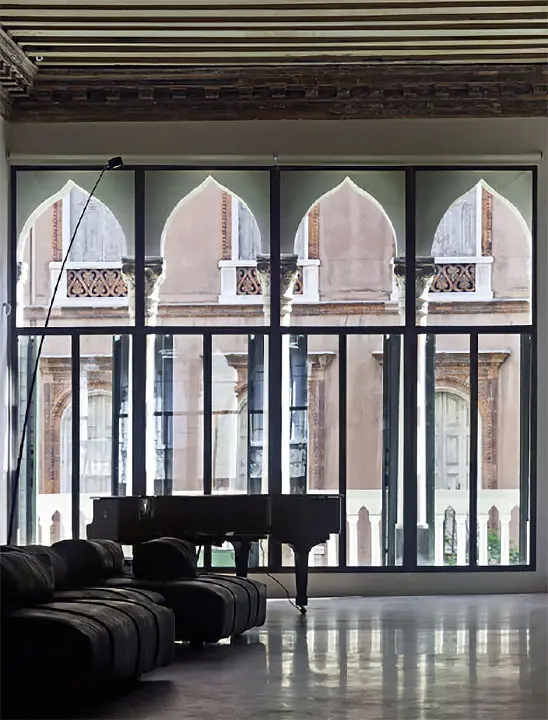
Windows are priced per piece, and the figures below refer to a two-sash window. The frame material sets the starting point. With triple glazing, high acoustic insulation and a burglar-resistant build, a window in slim-profile aluminium or in wood and aluminium starts from around €3,500, while steel, the thinnest and most architectural of the three, starts from around €9,800.
Shading and fittings come on top, and they are part of how the window performs, not an afterthought. A simple bathroom window needs only a design handle and a concealed insect screen, around €450 together. A French window in a living room can need the full set, around €3,000: a design handle (about €140), a subframe that keeps the opening true (€100), an insulated shutter box set flush in the wall (€400), an insulated aluminium roller shutter (€900) with its motor (€400), a concealed insect screen (€300) and a motorised technical blind (€800). Large sliding walls of glass, arched openings or frames that must match a listed façade cost more.
Doors
An armoured door starts from around €3,000. An interior door starts from around €1,200 for a standard lacquered door; the price rises with height, for doors of 240 or 270 centimetres or full-height doors that run from floor to ceiling, and with sliding systems, glass or panelled finishes.
Decorative Extras and Lighting
Boiserie, wallpaper and glass works are optional extras, budgeted on top of the figures above. A fluted-oak boiserie, the kind that can conceal an armoured door within the wall, starts from around €1,380 per square metre of wall. Wallpaper, laid, adds about €160 per square metre of walkable floor area, design lighting about €215.
Bespoke Furniture: the Line That Changes the Total
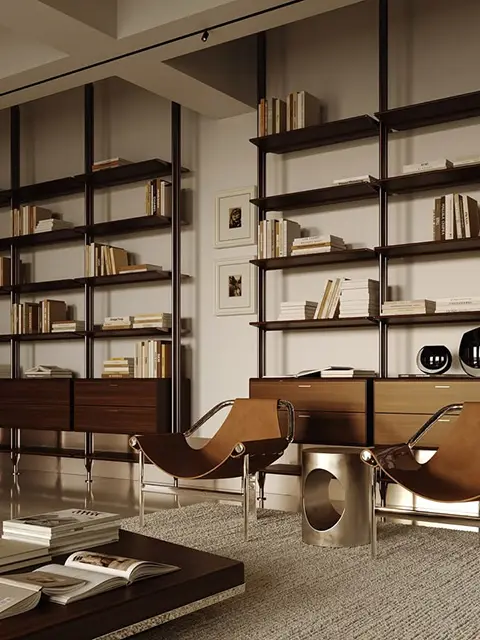
Made-to-measure furniture is what turns a renovated space into a home that feels designed down to the last millimetre, and it is the line that moves the total most: from around €2,100 per square metre of walkable floor area, indicatively. It covers the kitchen with walnut-fronted cabinetry, lacquered wardrobes with internal LED lighting, wall units with arched niches and an integrated writing desk, beds with storage bases, built-in benches and radiator covers with perforated fronts. In a large villa this figure can fall per square metre, because living spaces grow faster than the number of wardrobes and kitchens; in a home rich in libraries and dressing rooms it rises. Production takes about 60 working days once finishes are approved, plus 15 to 20 days of installation on site.
Beyond the Works: What a Full Home Remodel Cost Includes
A full home remodel cost includes more than the works: professional fees, statutory surveys and municipal permits, kitchen appliances, loose furniture, outdoor spaces and a contingency reserve.
Fees for the building surveyor, who handles permits and site paperwork, the architect and the interior designer usually amount to 5 to 10 per cent of the budget allocated to the project, depending on how much of the design and site direction is required.
Kitchen appliances, loose furniture and outdoor spaces are budgeted separately. On older buildings we recommend a contingency reserve of around 20 per cent, because the structure only reveals itself once floors and walls are opened. Italy continues to offer fiscal incentives for some home improvements, but eligibility changes with legislation, residency status and how the property is used, so early advice from an Italian tax specialist is essential.
Keeping Renovation Costs Under Control, from Survey to Site
Renovation costs stay under control when the design is complete before the quotes and the decisions are made before the site opens. Start with a technical survey of the roof, damp levels, foundations and systems before you buy or commit, and separate what the building needs from what you would simply like to have.
Then design completely before asking for prices. Full drawings and material specifications mean every contractor quotes the same project. Choose stone, fixtures and finishes early: changes made during the works are the most common reason a budget drifts.
On site, the trades need a clear sequence, so plumbers, electricians and finishers never undo each other’s work, and the reserve absorbs whatever the building reveals. One studio responsible for both design and site avoids the gaps that open between separate suppliers. If you are abroad, our online interior design service develops every detail remotely, and photorealistic renders and samples sent by express courier let you approve each choice before work begins.
Renovating a Lake or Country House in Italy
When you are buying, the house and the renovation are best evaluated together. A home on the northern lakes, in the Tuscan countryside or by the sea should be judged on its renovation potential as much as on its view. Our guide to buying a lake house in Italy explains how to weigh location and renovation side by side. Before you buy, Esperiri can help you assess a property’s potential on the interior design side and on the value side, so the renovation costs are clear before the deed is signed.
Renovating a House in Italy with Esperiri
As an Italian interior design studio and a luxury furniture supplier, Esperiri renovates homes in Italy for clients who live all over the world, with projects in Milan, Lake Como, Porto Cervo, Val d’Orcia, Bormio and Alassio. The works are carried out by our own construction team and Italian craftsmen, or by contractors you already trust; either way, Esperiri directs the site. Technical elements such as kitchens, bathrooms, doors, boiserie, wardrobes and windows are installed by our Italian craftsmen, or by your own trusted installers, and loose furniture is placed by our delivery team, or by you if you prefer. For homes outside Italy, we design and supply.
From initial spatial concepts to exhaustive technical specifications, our interior design team shapes every room with Italian rigour. Through our furniture supply service, we curate iconic pieces from Italy’s leading design houses together with windows, doors, and stone, marble and wood for floors and walls, while our bespoke furniture service connects your project directly with master Italian ateliers whenever an environment calls for a one-of-a-kind creation. Should you wish to experience materials firsthand, a bespoke Furniture Shopping Tour invites you to compare leathers, marbles, and timber finishes alongside an Italian designer in Milan.
The Cost of Renovating a House in Italy, Seen Through the Design
The cost of renovating a house in Italy need never feel opaque. At luxury level, interior works start from around €3,900 per square metre for works, systems and finishes, and from around €6,000 with bespoke furniture, plus 5 to 10 per cent in professional fees. Structural work, roofs and façades come on top. These figures are indicative starting points: every project is unique, and where yours lands depends on scope, building condition, location, level of finish and how the project is managed. When those decisions are thoughtfully aligned before work begins, the budget ceases to be a source of friction and becomes the very instrument that protects your architectural vision.
Shop, experience, and discover Italian design with Esperiri. Milan.
Renovation Costs in Italy at a Glance
Indicative starting costs at luxury level, interior works only, VAT excluded. The last column applies them to a 150 m2 apartment as listed for sale, about 110 m2 of walkable floor, with three bathrooms.
| Category | € per m2 walkable | € per m2 commercial |
150 m2 apartment, € |
|---|---|---|---|
| Renovation | |||
| General works | 1,445 | 1,055 | 158,500 |
| Electrical installation | 235 | 175 | 26,000 |
| Plumbing, gas and air conditioning | 390 | 285 | 42,500 |
| Radiators and towel warmers | 30 | 20 | 3,500 |
| Heat-recovery ventilation (VMC) | 135 | 100 | 15,000 |
| Home automation | 200 | 145 | 22,000 |
| Windows: from €3,500 per two-sash window, plus shading and fittings (about nine openings) | — | — | 60,000 |
| Doors: one armoured entrance door from €3,000 and ten interior doors from €1,200 each | — | — | 15,000 |
| Floors | 200 | 145 | 22,000 |
| Design lighting | 215 | 160 | 23,500 |
| Subtotal: renovation | 3,535 | 2,585 | 388,000 |
| Bathrooms | |||
| Three bathrooms: taps, wall-hung sanitaryware, vanity, shower tray and enclosure, mirror, shelves, tiles and tiling labour | — | — | 41,500 |
| Subtotal: renovation + bathrooms | 3,915 | 2,860 | 429,500 |
| Bespoke furniture | |||
| Kitchen, wardrobes, wall units and libraries | 2,100 | 1,535 | 230,500 |
| Total: renovation + bathrooms + bespoke furniture | 6,015 | 4,395 | 660,000 |
| Professional fees: building surveyor, architect, interior designer (5–10% of the total) | — | — | 33,000–66,000 |
| Optional extras (not included in the totals above) | |||
| Wallpaper, laid: depends on the walls covered | — | — | 17,500 |
| Fluted-oak boiserie: from €1,380 per m2 of wall (example: about 17 m2 of wall) | — | — | 24,000 |
| Glass works: glass-block panels and partitions, priced per project | — | — | 6,000 |
| Subtotal: optional extras | — | — | 47,500 |
Frequently Asked Questions
What is the cost of renovating a house in Italy?
At luxury level, interior works start from around €3,900 per square metre of walkable floor area for works, systems and finishes, VAT excluded, and from around €6,000 with bespoke furniture. Structural walls, roofs and façades are excluded. Every project is unique, so these figures are a starting point, not a quote.
How much do parquet and Venetian terrazzo cost per square metre in a luxury renovation?
Supplied and laid, VAT excluded: graniglia tiles from around €200 to €240 per square metre, including grinding, polishing and treatment; made-to-measure oak parquet from around €290 to €300; Venetian palladiana with 7 to 12 cm marble fragments from around €420 to €480; geometric oak panels from around €540. These are indicative starting figures.
How long does a Venetian terrazzo floor take to lay?
About a week for every 50 m2 of laying, one day of grouting, a week of curing and a week of grinding, polishing and treatment: roughly three weeks for 50 m2.
How much do high-end windows cost in Italy?
Priced per piece for a two-sash window, VAT excluded, with triple-glazed, acoustic, burglar-resistant frames: from around €3,500 in aluminium or wood and aluminium, and from around €9,800 in steel. Shading and fittings add from around €450 (handle and insect screen) to around €3,000 per opening (handle, subframe, insulated shutter box, motorised roller shutter, insect screen and technical blind). Indicative starting figures.
How much does a luxury bathroom renovation cost in Italy?
It depends on the choices more than on the size, so it is best read element by element. Per bathroom, VAT excluded: designer taps from around €2,400, wall-hung sanitaryware and vanity from €2,600, a solid-surface shower tray from €1,800, a glass enclosure from €2,100, mirror and shelves from €1,200 each, designer tiles from €100 to €200 per square metre, tiling labour from €1,500. Marble cladding easily doubles the cost of the room. Indicative starting figures.
How much do systems and VMC add to renovation costs?
From around €1,000 per square metre of walkable floor area at luxury level: about €235 for electrical, €390 for plumbing, gas and air conditioning (Daikin or Mitsubishi), €30 for radiators and towel warmers, €135 for heat-recovery ventilation (Zehnder or Viessmann) and €200 for home automation. Indicative starting figures.
How much are architect and interior design fees in Italy?
Fees for the building surveyor, architect and interior designer usually come to 5 to 10 per cent of the budget allocated to the project, depending on how much design and site direction is required.
What does a renovation budget include besides the works?
Professional fees, surveys and permits, kitchen appliances, loose furniture, outdoor spaces, shipping where relevant, and a contingency reserve. On older buildings, plan for around 20 per cent.
How long does bespoke furniture take?
About 60 working days of production once finishes are approved, plus 15 to 20 days of installation on site.
Can I manage a renovation in Italy from abroad?
Yes. With an integrated project team, the vast majority of the creative and technical process can be directed seamlessly from overseas. Esperiri designs remotely, directs the site in Italy and coordinates installation, so you approve renders and samples from wherever you live.
Are there tax incentives for renovating in Italy?
Italy provides periodic fiscal incentives for qualifying building renovations and energy upgrades. Because regulations, percentages, and eligibility criteria evolve regularly—and depend on residency status and property classification—you should always verify current rules with a qualified Italian tax advisor prior to committing.