

By Rachele Pellegatta Italian Furniture Online
In brief
- A rug is architecture for the floor. It defines zones, softens sound and sets the tone of a room.
- Shape, style and material shape the result. Scale and placement decide whether it feels luxurious.
- The finest luxury rugs share three virtues: noble fibres, honest construction and careful finishing.
- Every room asks for a different choice. A surface that shines in the bedroom can fail in the kitchen.
- A clear method turns a rug into part of one coherent home.
Close your eyes and think of the rooms you remember best. Often it is not the sofa you recall, but the first step of the morning: wool that gives a little under bare feet, a colour that glows when the afternoon light reaches the floor, the hush that falls over a room when a rug quietly absorbs its echo. A rug is where a room first touches you.
Carpet or Rug: How to Choose the Right Carpet for Your Home
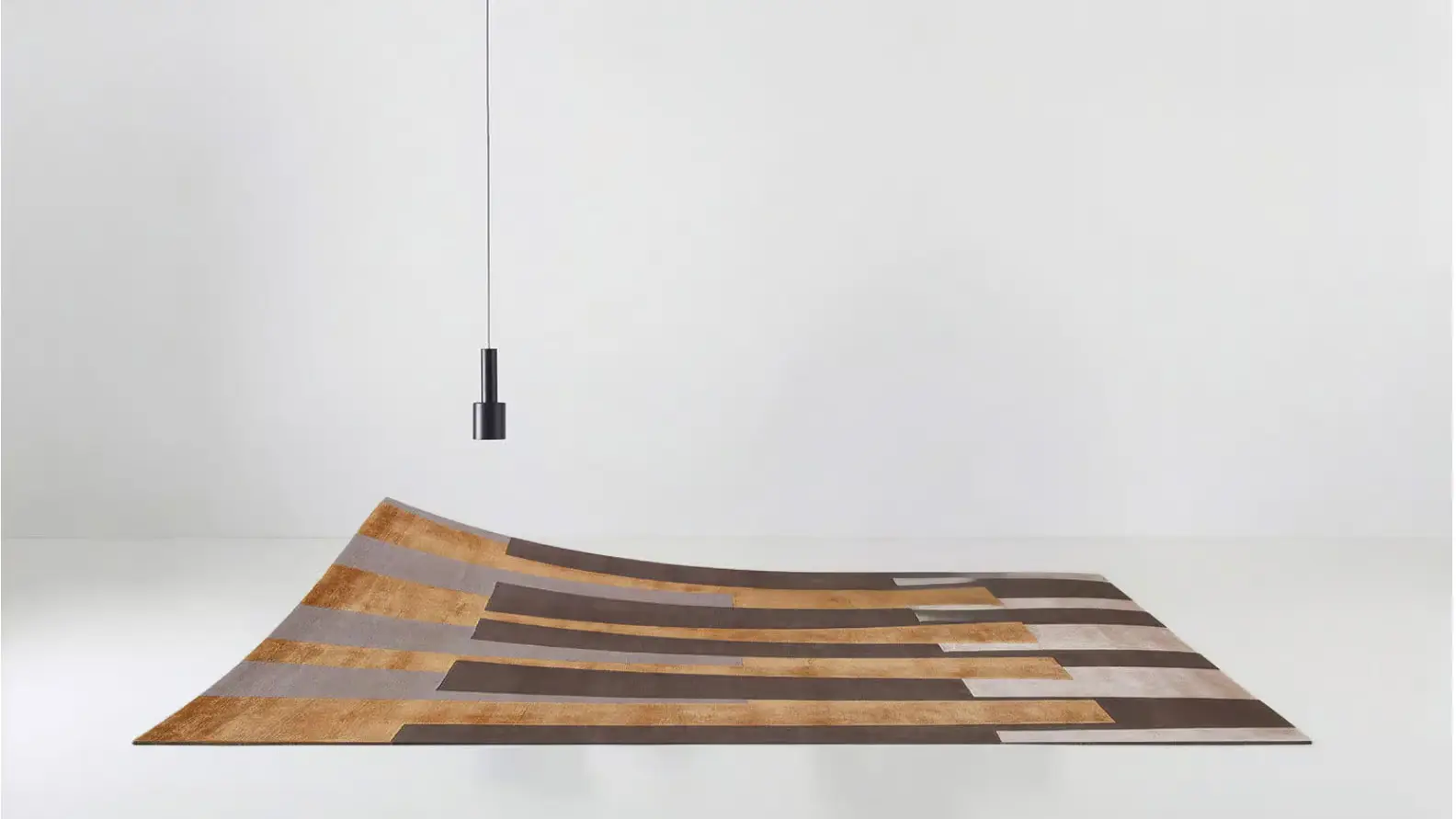
In Italian, one word covers both: tappeto. In English, the words part ways. A carpet is usually fitted wall to wall. A rug is a loose piece that rests on the floor.
Fitted carpet offers continuity. It warms the room, muffles sound and removes visual breaks. It suits bedrooms, dressing rooms and private lounges.
A rug offers freedom. It defines a seating area, frames a dining table and can move with you from house to house. It can also become the most expressive piece in the room.
Italian design treats the rug as part of the architecture. It follows the proportions of the room, not the other way round. It often stays quiet, so that the material can speak.
That quiet confidence is what separates luxury rugs from simple decoration. It is also the first answer to the question many clients ask us: how to choose the right carpet for your home. Start with the room, then let the rug follow.
Luxury Rug Shapes: Let the Room Lead
The shape of a rug should echo the room or contrast with it on purpose; a half-echo looks accidental. Rectangular is the classic choice: it follows the lines of the room and suits most sofas, beds and tables. Square belongs to symmetrical spaces, central lounges and square dining tables. Round softens a room full of right angles and pairs beautifully with a round table or an entrance hall. Organic outlines, irregular and sculptural, are the signature of high end contemporary rugs: pair them with simple furniture so the form can breathe. And a runner dresses corridors, landings and galley kitchens, as long as a band of bare floor is left on each side.
High End Contemporary Rugs: Styles from Quiet to Bold
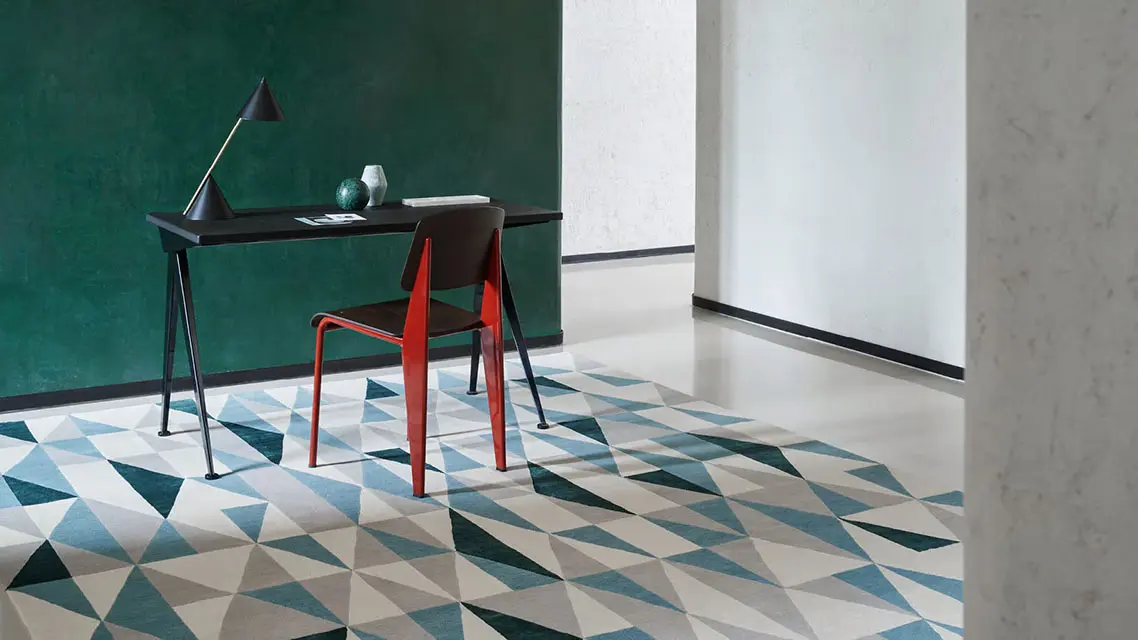
Begin with the room, not the rug. If the space is rich in colour and pattern, choose a calmer rug; if it is spare and pale, the rug can lead. Tonal and quiet rugs in sand, chalk, moss and soft grey create depth without noise, flatter natural light and age gracefully. Geometric grids and stripes give order and sit well with architectural interiors and boiserie, like the one portrayed in the picture, the Diamantina rug designed by Gio Ponti for Amini. Vintage-inspired medallions, florals and faded effects add a sense of history and warm modern rooms. Artistic, abstract compositions turn the floor into a canvas, so keep walls and furniture restrained. Textural, raised weaves and tone-on-tone surfaces act as pattern without colour, a favourite of quiet luxury. What an Italian eye adds to any of these is restraint: the rug is chosen after the architecture, the light and the furniture, never before.
Materials: Where Luxury Rugs Begin
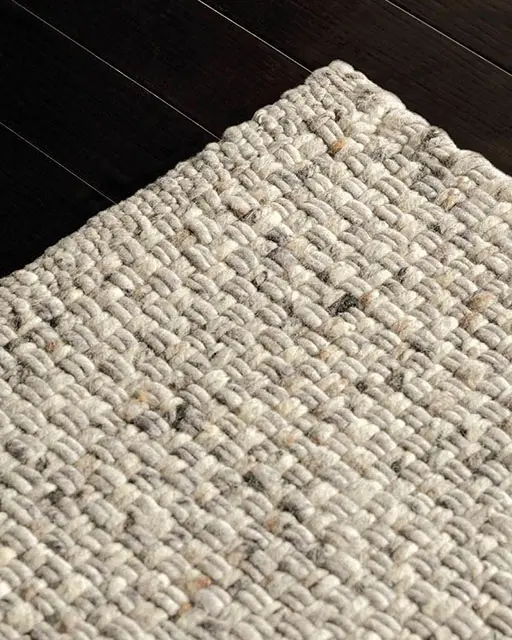
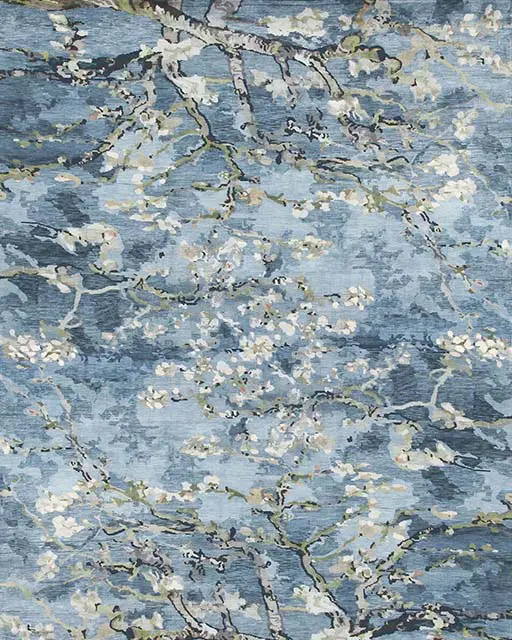
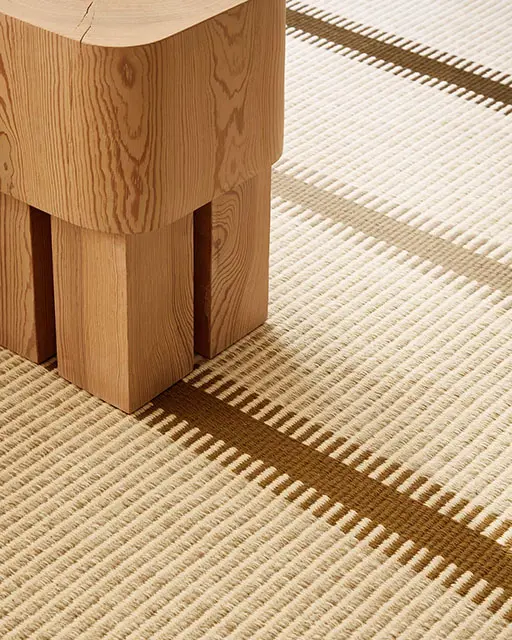
Material determines how a rug looks, feels and ages. It also decides where it can live.
Wool is the reference fibre, resilient, naturally warm and forgiving. At its finest it becomes Himalayan wool, hand spun and silky, or lustrous New Zealand wool like the one on the first picture by Minotti; undyed, it offers a soft range of ivories and browns. Pure silk is luminous and fine (like the one in the center produced by Amini), and rewards low-traffic rooms or a blend with wool for strength; mohair adds a soft, light-catching sheen. Linen (as you can see in the third picture by Kasthall) and cotton are light and matt, ideal for summer houses, bathrooms and relaxed spaces. Among natural fibres, sisal and seagrass are the workhorses, resisting heavy traffic with a crisp, organic texture, while abaca is softer and more refined, at the higher end of natural weaves; jute is soft and affordable but a short fibre that wears in paths and sheds over time. Leather and hide are sculptural, tactile accents for bedrooms and studies, and recycled synthetics are made for terraces and outdoor rooms, where moisture and sun are constant.
Construction matters as much as fibre. A hand-knotted rug is slow to make and built to last for decades. A hand tufted rug is softer and faster to produce. A handwoven flatweave is slim and graphic, ideal under chairs and doors.
Pile height completes the picture. Low pile is practical. High pile is plush, and best kept for rooms where bare feet rule.
What Makes Luxury Rugs Truly Luxurious
Luxury is not a price. It is a sum of small decisions.
It begins with the fibre: noble, natural and well chosen for its room. Then the construction, dense and even, made by skilled hands. Then the finishing: clean bound edges or refined fringes, with no loose threads. Colour matters, with a depth that shifts gently with the light, and so does scale, generous enough to anchor the furniture, never timid. Last comes placement, aligned with the architecture and held by a quality underlay.
That last point is often forgotten. A good underlay cushions the step, protects the fibres and keeps the rug flat. It is an invisible detail that you feel every day.
Room by Room: Where Luxury Rugs Belong, and Where They Don’t
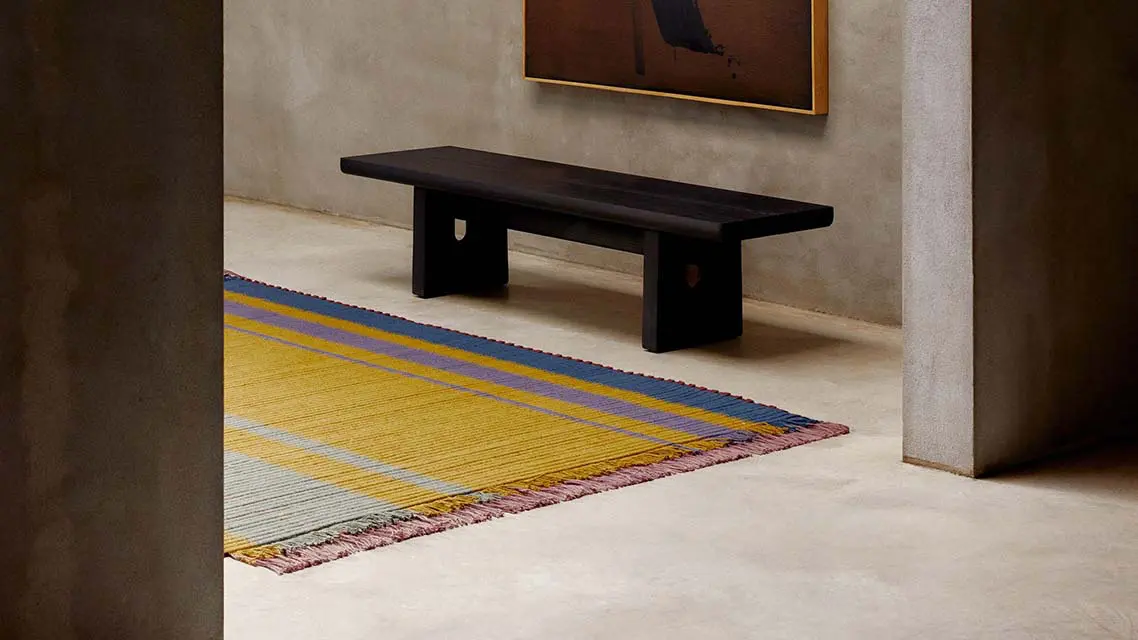
The same rug can delight in one room and disappoint in another. Here is a walk through the house.
Walk through the house as a guest would. In the entrance, the rug meets shoes, sand and rain, so it asks for a tight wool or a low-pile flatweave; high pile and delicate silk would trap dirt and wear within a season. In the living room, the rule is generosity: the rug should be large enough to hold at least the front legs of every seat, which usually means 200 x 300 cm, or 250 x 350 cm in larger rooms, with a border of bare floor around it. A small rug that floats in the middle of the room only makes the space feel smaller.
In the dining room, think of the chairs: the rug should extend about 60 cm beyond the table on every side, so that the chairs stay on it when guests sit down. Wool or a flatweave in a medium tone is ideal, while high pile and loops catch chair legs and gather crumbs. In the bedroom, give the most generous piece of all: placed under the bed, perpendicular to the frame, and extending past both sides and the foot. For a king bed, 250 x 300 cm is a safe start. Your first step of the day should always be soft, and a rug that stops at the nightstands only cuts the room into pieces.
Corridors and landings call for a runner in sisal or wool flatweave, held by a non-slip underlay; thick pile and loose fringes are hazards in a passage. The kitchen prefers a low runner in cotton, wool flatweave or recycled fibre, easy to clean, and has no friendship with fitted carpet, long pile or fine silk. In the bathroom, choose absorbent cotton that dries quickly, and keep silk, jute and other fibres that dislike moisture well away.
The study asks for a low pile, so that the chair can roll freely, while the dressing room welcomes a generous, soft rug or a fitted carpet, provided coarse natural fibres stay away from bare feet. And on the terrace, only a recycled synthetic rug made for outdoor use will survive: indoor wool and natural fibres are spoiled by sun and rain.
How to Style Luxury Rugs
Start with scale: choose the size first, then the pattern. Keep one colour thread, echoing a tone from the curtains, the upholstery or an artwork, and let one pattern lead: if the rug is bold, keep cushions and throws calm. Layering works when it is intentional, a small textured rug over a large neutral flatweave. Mind the light, because sheen and colour change from morning to evening, so look at samples at home. And think of the whole house: repeat a palette or a texture from room to room, and the rugs will feel related.
This last idea is the heart of our whole house interior design approach. Floors, walls, doors and furniture speak one language. The rug is simply the part you walk on.
Choosing Luxury Rugs with Esperiri
A rug is rarely a single purchase. It belongs to a plan that includes furniture, lighting and finishes.
At Esperiri, our designers follow that plan from the first sketch to the final installation. Our interior design service places every rug within the layout of the home. Through our furniture supply service, we source pieces from Italian houses and coordinate shipping. When a room needs a special size or a special shade, our bespoke furniture service can help.
Seeing and touching remains the best way to choose. On a Furniture Shopping Tour, you compare fibres, piles and colours in person, with an Italian interior designer at your side. If you cannot travel, our online interior design service brings the same guidance to you. For a full renovation, our luxury home renovation service extends the plan to the floors themselves.
Choose the Right Carpet for Your Home with Patience
The right rug does not shout. It anchors the room, flatters the light and quietly improves every day. It starts with a clear question, a good material and a place that suits it.
With that method, a rug stops being an afterthought and becomes the quiet foundation of the room. Choose with patience, and your floors will tell the same story as the rest of the house.
Shop, experience, and discover Italian design with Esperiri. Milan.
Frequently Asked Questions
How do I choose the right carpet for my home?
Start with the room and its use. Then choose the size, the shape, the material and the style, in that order. Check samples at home in natural and evening light. Finally, plan the placement and the underlay.
What size should a luxury rug be?
In a living room, it should hold at least the front legs of all seats. In a dining room, it should extend about 60 cm beyond the table. In a bedroom, it should pass the sides and the foot of the bed.
Which material is best for high end contemporary rugs?
Wool is the most versatile choice for living areas and bedrooms. Silk or silk blends suit quiet rooms. Sisal and seagrass handle heavy traffic. Recycled synthetics are the right choice outdoors.
Where should I avoid placing a rug?
Avoid delicate rugs in entrances, kitchens and bathrooms. Avoid high pile under dining chairs. Avoid natural fibres in damp spaces and outdoors.
Hand-knotted or hand-tufted luxury rugs: which should I choose?
A hand-knotted rug is slow to make and built to last for decades, which suits living rooms and spaces you want to keep for life. A hand-tufted rug is softer and faster to produce, a good choice for bedrooms and dressing rooms. A handwoven flatweave is slim and graphic, ideal under chairs and doors.
How do I care for a luxury rug?
Vacuum regularly, without a rotating brush on delicate piles, and rotate the rug from time to time so it wears evenly. Blot spills at once instead of rubbing. For silk and hand-knotted rugs, entrust deep cleaning to a specialist.
Can I order a luxury rug in a special size or colour?
Yes. When a room needs a special size or a special shade, our bespoke furniture service can help, and our designers plan the rug together with furniture, lighting and finishes.
Can Esperiri help me choose and place rugs in my home?
Yes. Our designers plan rugs together with furniture, lighting and finishes. We source pieces from Italian houses and coordinate shipping, with one point of contact.