

By Alessio Italian Furniture Online
In brief
- The great Italian kitchen houses began as workshops, exactly like the one a local craftsman runs today. They kept the craft and added architects, engineers and a century of research on luxury designer kitchens.
- High end bespoke kitchens from these houses answer to your measurements, finishes and way of living, so the choice is rarely industrial versus personal.
- A design kitchen and a handmade kitchen each have real trade-offs: certification, consistency and engineering on one side; price and true one-of-a-kind freedom on the other.
How high-end italian kitchens stepped into the light
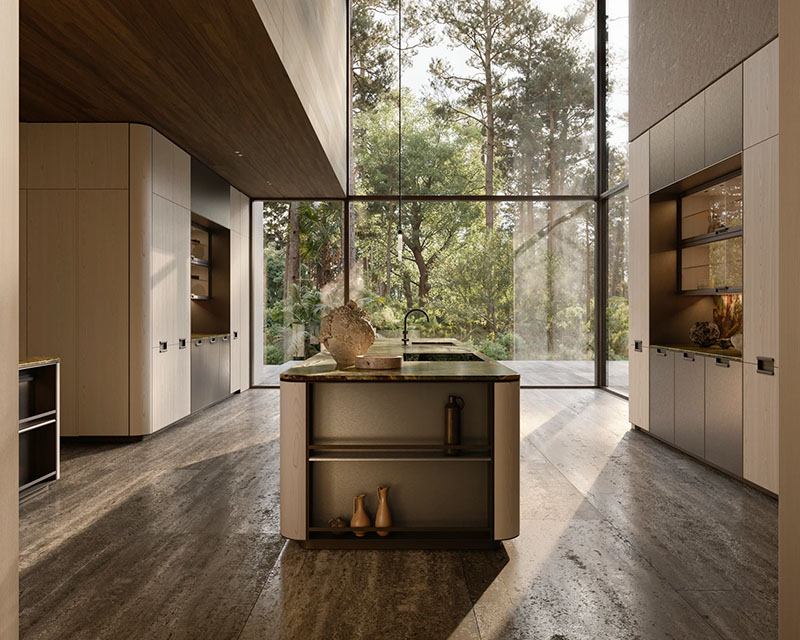
For most of the last century, the kitchen worked in the shadows. Families tucked it behind a door, kept it practical and entertained somewhere else. Then the house turned itself around. The table moved in, the island arrived, and the room where the day begins and ends became the one guests never want to leave. Today the kitchen sets the tone for everything around it, and the way you build one deserves the attention you would give a living room.
Most clients arrive at the same crossroads: design versus handmade kitchen. On one side stands a house with a name, a designer and a century of engineering. On the other stands a skilled craftsman who will build a handmade kitchen to your plan, from timber they have chosen themselves. Both paths carry real appeal, and neither is simply “better” — the right answer depends on what the project actually needs.
A short history: every great house began at a workbench
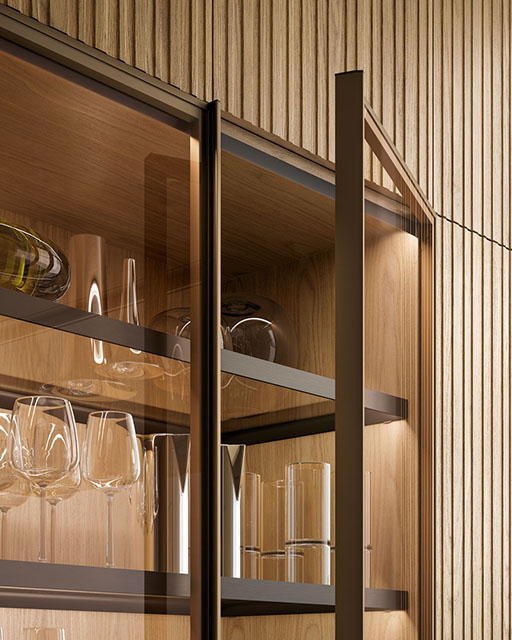
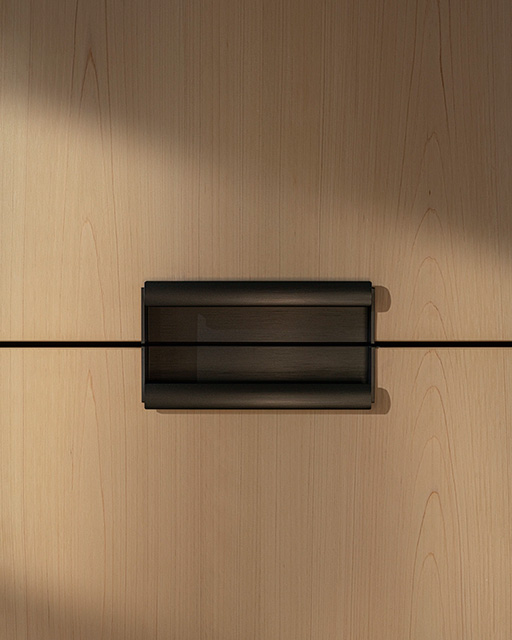
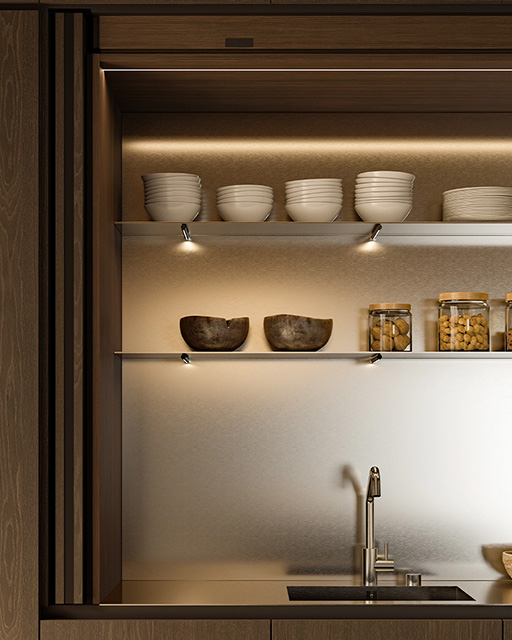
The names that define the Italian kitchen did not start as factories. In 1925, Silvio Fortuna reopened his family’s woodworking shop in Caldogno, the seed of Arclinea. A year later, a workshop opened near Milan under the name Dada — today folded into Molteni&C, which continues to design and produce its kitchens. In 1934, Piero Boffi set out to build the modern kitchen in Brianza, the heartland of Italian furniture.
What turned these workshops into houses was a decision to invite architects into the kitchen. Boffi did it at a time when no kitchen company did. Arclinea launched its first modular kitchen in 1958 and its first kitchen with built-in appliances in 1963. The workshop that became Molteni&C;’s kitchen division presented Polidada in 1975 and redefined it in 1983, a modular system whose elements could organize a kitchen, a dining room or an entrance with the same logic. A design house, in other words, does not oppose the handmade tradition. It carries that tradition forward, with a studio, a laboratory and a memory.
Materials: where research meets the grain
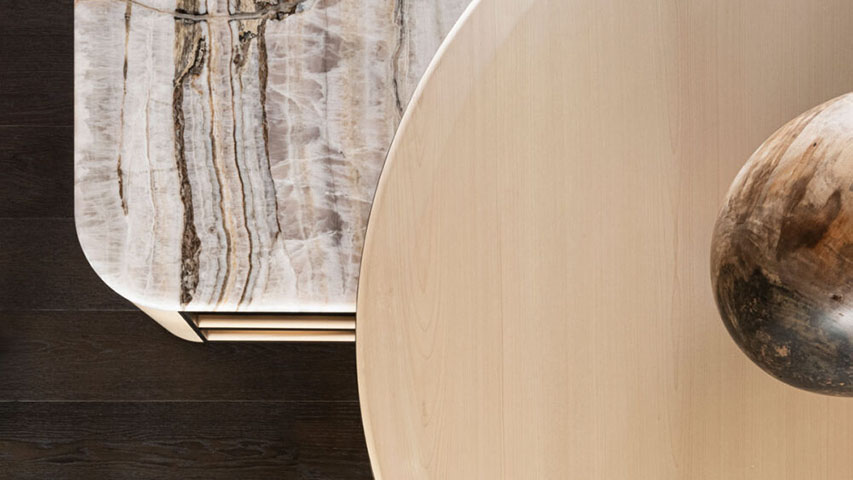
A gifted woodworker selects beautiful timber, and that instinct deserves respect. A great house starts from the same instinct and adds the laboratory. Its teams develop stable substrates, finishes that withstand heat, steam and daily wear, and hardware tested far beyond anything a household will ask of it. They also buy at a scale that lets them secure the same stone, veneer or lacquer across years, so a drawer front you order in a decade still matches the kitchen you installed today.
This is where a design kitchen earns its place in a home that values materials that age well. The surfaces arrive calibrated, the joints close with a quiet precision, and the appliances disappear into the architecture, an idea Arclinea pioneered when it fitted them into the cabinetry decades ago.
Mechanisms and technology: refined on hundreds of projects, not one
Disappearing hinges, integrated appliances, soft-close systems engineered to work silently for decades: this is research that only makes sense at scale. A great house tests a mechanism across hundreds of kitchens before it reaches a client’s home, refining it each time a flaw surfaces. A single workshop, building one kitchen at a time, simply never accumulates that volume of feedback — however skilled the hands doing the work.
Consistency across more than one property
For a client furnishing several homes to the same standard — a family compound, a development of more than one residence — a design house offers something a workshop cannot easily promise: the same finish, the same mechanism, the same quality control, repeated identically across every unit. An artisan kitchen, however excellent, is still the result of one person’s hand on one particular day; asking for an exact match months or years later, in a different property, is a different kind of request than ordering from a documented system built to be reproduced precisely.
The designers: a kitchen with an author
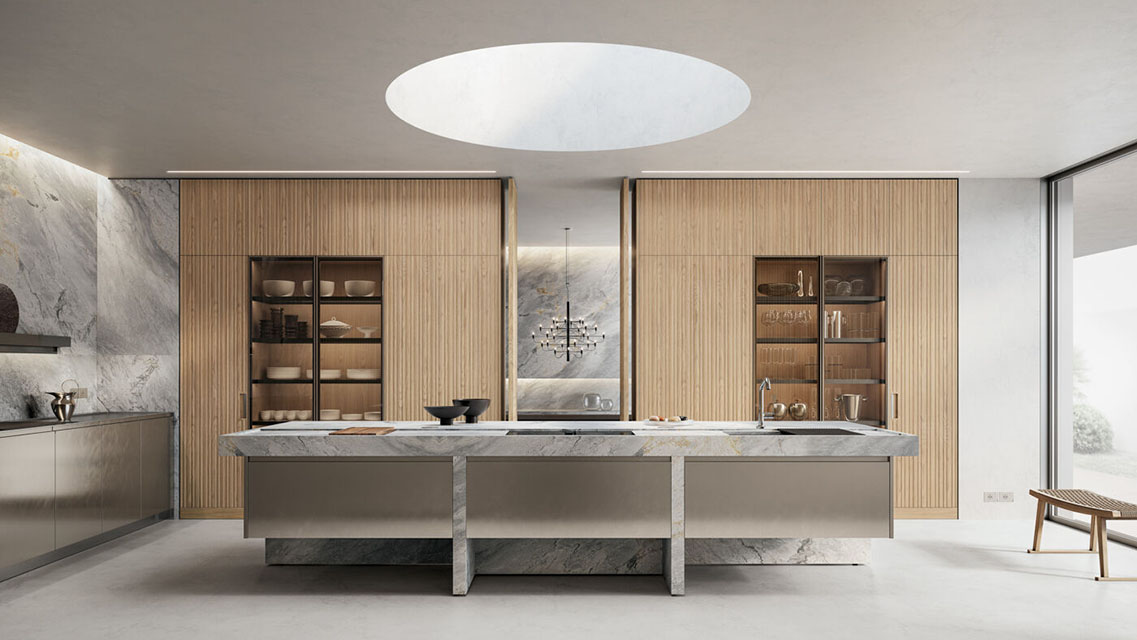
Behind every celebrated kitchen stands a hand you can name. Antonio Citterio has designed and coordinated the Arclinea collection since the late 1980s. His Italia kitchen brought the steel, the double island and the working logic of a professional kitchen into the home. At Boffi, Joe Colombo’s Minikitchen reached the Museum of Modern Art in New York, Luigi Massoni drew the Xila system, and Piero Lissoni has guided the house as art director since 1990. More recently, Zaha Hadid Design brought the sculptural Cove kitchen to the collection, a piece you can see at the Boffi SoHo showroom.
When you choose among high end bespoke kitchens from houses like these, you acquire more than cabinetry. You acquire a lineage and a language. The bespoke kitchen designer working inside the house adapts that language to your room and keeps every proportion in dialogue with the original idea.
Reliability: the advantage you notice years later
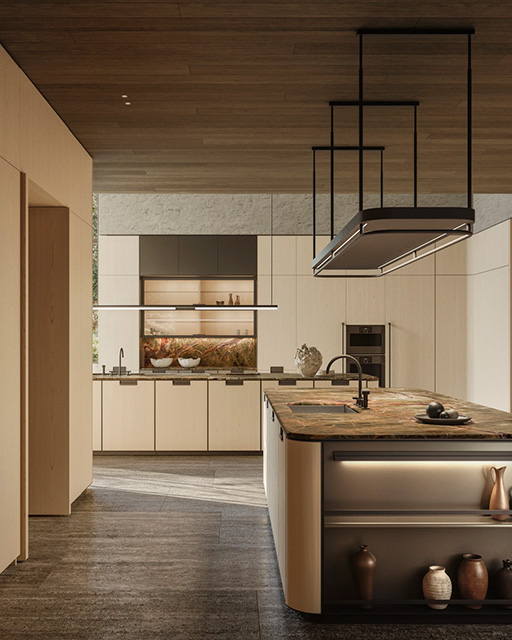
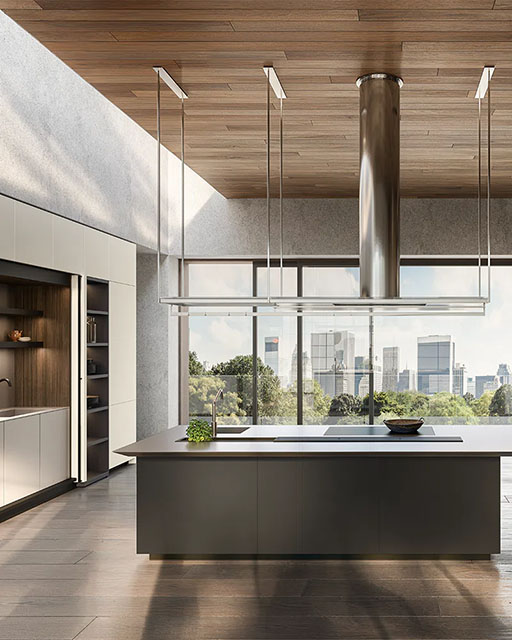
The true test of a kitchen rarely arrives on day one. Assistance is normally what the first months are about, as the kitchen settles into daily use; the real difference shows up later, when a family wants to adjust a layout, replace a finish, or extend an island years into the life of the kitchen.
This is where a house outlasts a workshop, in a way worth weighing against the craftsman’s advantages above. A great house answers with a documented system: finishes still in production, hardware still in catalogue and a service network that reaches your door, however many years have passed. A handmade
kitchen depends on one craftsman’s workshop staying open and able to take on new work — and even a devoted craftsman cannot always guarantee that.
Industrial discipline also protects the everyday, and it cuts both ways. Each component from a great house follows the same specification, so the drawer you open at midnight glides exactly as it did on the first morning — a consistency a single workshop can struggle to repeat piece after piece, where execution depends on the day and the hand doing the work.
Bespoke, in the fullest sense
Within the design-house route, the fear that a design kitchen means a catalogue kitchen no longer holds. The leading houses cut to your dimensions, develop finishes with you and shape the configuration around the way your family cooks. The finest high end bespoke kitchens come from exactly these ateliers, where a technical office translates a client’s wish into a drawing the factory can build precisely.
One advantage a single workshop rarely matches here: the sheer range of finishes. A great house can offer woods, lacquers, stones and metals in a breadth no artisan bench can stock on its own. Bespoke, in this version, does not mean choosing from a handful of options — it means choosing from nearly all of them, while a craftsman’s bespoke means choosing from none of them, and inventing instead.
At Esperiri, we don’t steer every client toward the same answer. We accompany you through the major Italian houses on a Furniture Shopping Tour, and coordinate supply, shipping and installation through our furniture supply service, with our Italian craftsmen completing the work in your home. When what you want is a piece built from nothing, with no system behind it, our bespoke furniture service puts you directly in touch with the Italian workshops that build exactly that. Either way, the choice stays yours. For inspiration before you begin, explore our guide to Italian kitchen design.
Shop, experience, and discover Italian design with Esperiri. Milan.
Frequently asked questions
Is a bespoke kitchen from a design house really unique, or does it still look like a catalogue design?
It is bespoke within a system: the house adapts dimensions, finishes and configuration to your project, but the result still speaks that house’s design language. A craftsman working from nothing, with no system behind the piece, can offer something a house cannot — a kitchen that exists nowhere else.
Is a design kitchen more expensive than a handmade kitchen?
Usually, yes. Part of what you pay for with a named house is the brand and its distribution and service network, not only the material and labor. A handmade kitchen typically reaches a comparable standard of craft for less, since the budget goes entirely into the piece itself.
Can one craftsman build matching kitchens for more than one property?
It is possible, but harder to guarantee than with a design house. A house works from a documented system built to be reproduced identically across units, which suits a client furnishing several homes to the same standard. A craftsman’s kitchen is, by nature, the result of one person’s hand on a given day — replicating it precisely later is a different undertaking than reordering from a catalogue system.
What is the difference between a designer kitchen and a bespoke kitchen?
A designer kitchen carries the signature of a named designer or architect and comes from a house with its own collection. A bespoke kitchen adapts to your exact space, finishes and habits. The two overlap: leading Italian houses offer bespoke versions of their designer systems — a different thing from a craftsman’s bespoke, built with no system at all.
What are the best Italian luxury kitchen brands?
Boffi, Molteni&C; (through what was the Dada workshop) and Arclinea sit at the top of the category, each with its own history, design language and roster of architects and designers.
How long does a high-end kitchen last?
A high-end kitchen serves for decades. Longevity depends on the quality of its materials and hardware, on regular care, and on whether the maker — house or craftsman — can still support it years later: a question a documented house usually answers more reliably than a single workshop.
Design kitchen or handmade kitchen — how should I decide?
There isn’t a single right answer. A design house offers certification, tested engineering and a service network that outlasts any one person; a craftsman offers a lower price, a direct relationship, and a piece that will never exist anywhere else. Esperiri can walk you through both routes against your own project, rather than pointing you toward one by default.